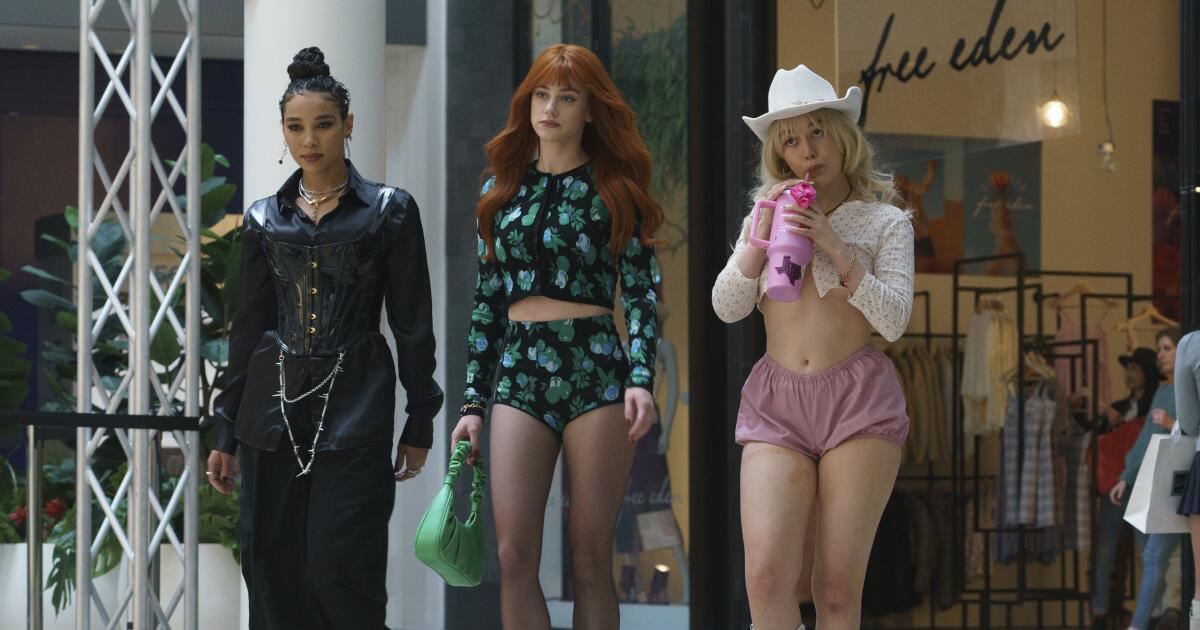
From the moment Meredith Alloway's "Forbidden Fruits" introduces us to Apple (Lili Reinhart) delivering a scalding hot latte to a lewd bystander, it's immediately clear that this isn't your average thriller. "Forbidden Fruits" is a visceral, unapologetic, and aggressively campy cinematic experience that dares to blend sisterhood, sapphic yearning, and divine femininity with a healthy dose of mall mayhem. If you're looking for a film that’s as righteous as it is incendiary, then this Forbidden Fruits Review will illuminate why this movie is a must-watch.
A Coven in the Checkout Aisle: Unpacking the Premise
The film transports us to the seemingly mundane setting of a Dallas mall, specifically to a boutique called Free Eden. Here, we meet our central trio: the sharp-witted Apple (Lili Reinhart), the enigmatic Fig (Alexandra Shipp), and the alluring Cherry (Victoria Pedretti). They’re not just sales associates; they’re a unit, meticulously sharpening their personalities and their customers' insecurities to rake in profits for the company by pushing high-end fashion and knick-knacks.
The naming convention – Apple, Fig, Cherry – is no accident. It’s a deliberate, almost overt nod to biblical temptation and forbidden knowledge, setting a maximalist canvas where subtlety is less a goal and more a delightful casualty. The store itself, Free Eden, further solidifies this thematic foundation, challenging viewers to find any subtext that isn’t already screaming for attention. This directness, however, allows the film's larger provocations around kinship, power, and identity to take center stage without needing to be unearthed.
The narrative truly kicks off with the arrival of Pumpkin (Lola Tung), a new girl who, after a chance encounter with Fig, quickly becomes the fourth member of their tightly-knit group. As Pumpkin ingratiates herself into their world, she begins to notice the peculiar routines and strictures that govern the Fruits’ lives – everything from their dietary habits to their sexual conduct. Her initial curiosity soon morphs into suspicion, hinting at something far more supernatural at play. It's not long before Pumpkin's fears are confirmed: the Fruits are a coven, their "activities" culminating in the gathering of elements for a cauldron and the precise cursing of those who have wronged them. This transition from mall employees to modern-day witches is where "Forbidden Fruits" truly carves its unique niche, offering a depraved satirical thriller that feels like 'Mean Girls' met 'The Craft', with a much darker, more subversive edge.
More Than Just Witches: Themes of Sisterhood, Identity, and Exploitation
"Forbidden Fruits" delves deep into the complexities of female relationships, exploring the intoxicating allure of sisterhood alongside its potential for manipulation and exploitation. Pumpkin's journey is central to this exploration, as she grapples with the prospect of community and the burning urge to question the coven’s imperfections. The film skillfully portrays how the desire to belong can lead individuals to deny their true selves, conforming to a larger group identity.
- The Allure of Belonging: The coven offers a powerful sense of community and shared purpose, especially for young women navigating a world that often seeks to diminish them. This provides an almost irresistible draw for Pumpkin, eager to find her place.
- Questioning Authority: As Pumpkin digs deeper, she confronts the darker side of this unity. The strict routines and the coven's methods raise uncomfortable questions about control, individuality, and the ethics of their power. This internal conflict is a powerful engine for the film’s dramatic tension.
- Sapphic Yearning and Divine Femininity: The film pulses with an undercurrent of sapphic yearning and a celebration of divine femininity. These elements aren't just aesthetic choices; they are integral to the coven's power dynamics and their understanding of themselves. It’s a subtle yet potent exploration of female energy and desire, breaking away from conventional representations.
- Feminist Wrath and Satire: From Apple's aggressive opening act of retribution to the coven's collective cursing, the film channels a righteous feminist wrath. This anger is filtered through a lens of sharp-witted black comedy, using satire to critique societal norms and expectations placed upon women. It's a cathartic scream wrapped in a stylish, often darkly humorous package.
The film brilliantly examines the fine line between empowering sisterhood and a coercive collective, posing profound questions about where loyalty ends and exploitation begins. It’s a compelling study of how power corrupts, even when wielded in the name of retribution.
The Glitz, the Gore, and the Grand Vision: Style and Direction
Meredith Alloway’s commanding first feature stands out for its distinctive style and audacious vision. "Forbidden Fruits" operates on a maximalist canvas, where every frame is laden with intent, from its aggressively campy tone to its stylized cinematography. Alloway has something righteous and incendiary to say, and she says it with both glitz and gore.
A Wardrobe with a Pulse: Sarah Millman’s Costume Design
A particular highlight of the film, and a significant contributor to its unique atmosphere, is Sarah Millman’s effervescent wardrobe work. The costumes are not merely outfits; they are characters in themselves, pulsating with life. Millman dresses the Fruits in an array of pieces that are equal parts sultry, prismatic, and commanding. The hues and textures appear to react in real-time to the emotions and actions of the bodies wearing them, making the clothing feel like a living organism. This meticulous attention to sartorial detail elevates the film, adding a divine, cosmic heft to a story that largely remains within the confines of a mall and its parking lot. The fashion becomes a visual language, amplifying the themes of power, identity, and the characters' supernatural essence.
Lili Reinhart's Radiant Performance
While the entire ensemble delivers compelling performances, Lili Reinhart truly shines as Apple. Her portrayal anchors the film's bold tone, balancing the character's ferocity with a simmering intensity that is both captivating and unsettling. Reinhart embodies the film's blend of strength, vulnerability, and unapologetic self-possession, making Apple a memorable and complex character. Her performance, alongside those of Alexandra Shipp, Victoria Pedretti, and Lola Tung, creates a dynamic and believable coven, even amidst the fantastical elements.
Despite its confined setting, "Forbidden Fruits" punches above its weight. The meticulous direction and stylistic flourishes transform a localized narrative into one with universal themes, making the mall feel like a crucible for cosmic forces. It’s a testament to Alloway’s vision that the film rarely leaves the confines of Highland Place mall, yet manages to feel expansive and deeply resonant.
Practical Takeaways for the Viewer: Why Watch Forbidden Fruits?
After this detailed Forbidden Fruits Review, you might be wondering if this unique blend of genres is for you. Here are some reasons why you should carve out time for this film:
- For Lovers of Unique Genre Blends: If you enjoy films that defy easy categorization – combining elements of thriller, satire, dark comedy, and supernatural horror – "Forbidden Fruits" is a refreshing watch. It offers a fresh take on the witch coven narrative, infusing it with modern sensibilities and biting social commentary.
- A Film to Spark Conversation: Whether you watch it alone or with friends, this movie is guaranteed to spark discussions. Its themes of female empowerment, the darker side of community, and societal pressures make it rich fodder for post-viewing analysis. It’s perfect for a spirited debate over cocktails.
- Embrace the Camp: The film’s "aggressively campy tone" is a feature, not a bug. To fully enjoy "Forbidden Fruits," go into it with an open mind, ready to embrace its maximalist aesthetic and over-the-top moments. It's a deliberate artistic choice that enhances its satirical edge.
- Value in Multiple Viewings: While it works perfectly as background viewing during a lively sleepover with gossip and liquor flowing freely, "Forbidden Fruits" also rewards closer attention. Devoting time to its cosmically tragic levels will uncover deeper meanings and nuances, making a second watch potentially even more rewarding than the first.
This film is a bold statement, unafraid to provoke and entertain in equal measure. For more insights into its unique blend of styles, consider checking out this article: Forbidden Fruits Review: Mean Girls Meets The Craft with Witches. And to delve deeper into the standout performance that grounds this wild ride, read about how Lili Reinhart Shines in Forbidden Fruits: Sapphic Coven Thriller.
Conclusion
"Forbidden Fruits" is more than just a film; it’s an experience. Meredith Alloway has crafted a singular vision that pulses with feminist rage, sapphic charm, and a darkly comedic heart. It’s a movie that defies expectations, challenging viewers to look beyond the glitz and gore to find a profound exploration of identity, sisterhood, and the hidden power dynamics within seemingly innocent relationships. This Forbidden Fruits Review concludes that while its aggressively campy tone might not win everyone over, for those who appreciate cinema that's bold, thought-provoking, and visually stunning, this journey into mall mayhem and witchy retribution is an absolute triumph. It’s a film that demands attention, rewards contemplation, and ultimately leaves an indelible mark.